Sewing Abbreviations and Vocabulary
Abbreviations used in Denes Anna Design sewing patterns:
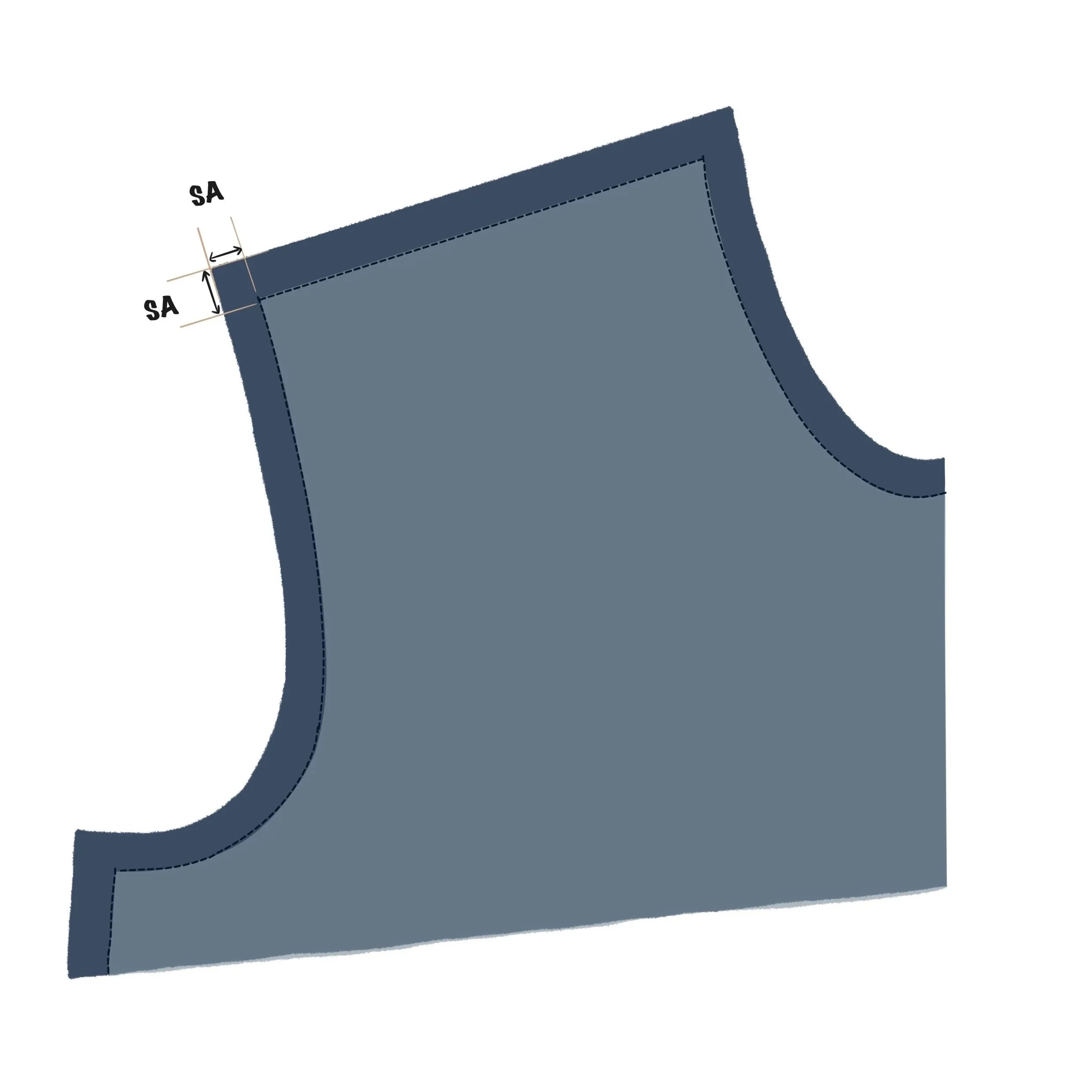
SA: Seam Allowance
The space between the stitching line and the raw edge.
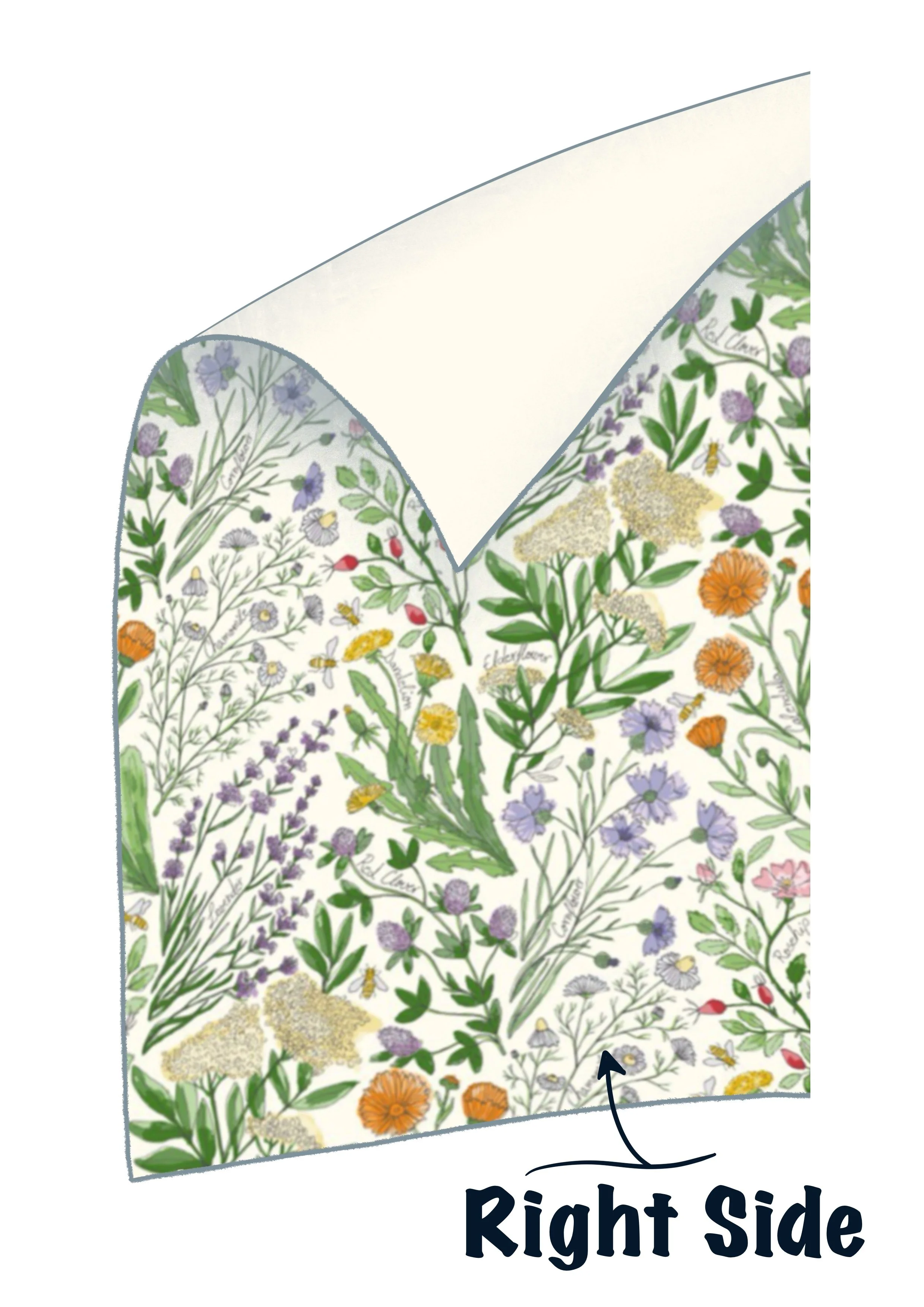
RS: Right Side
The side of the fabric intended to be visible on the finished garment.
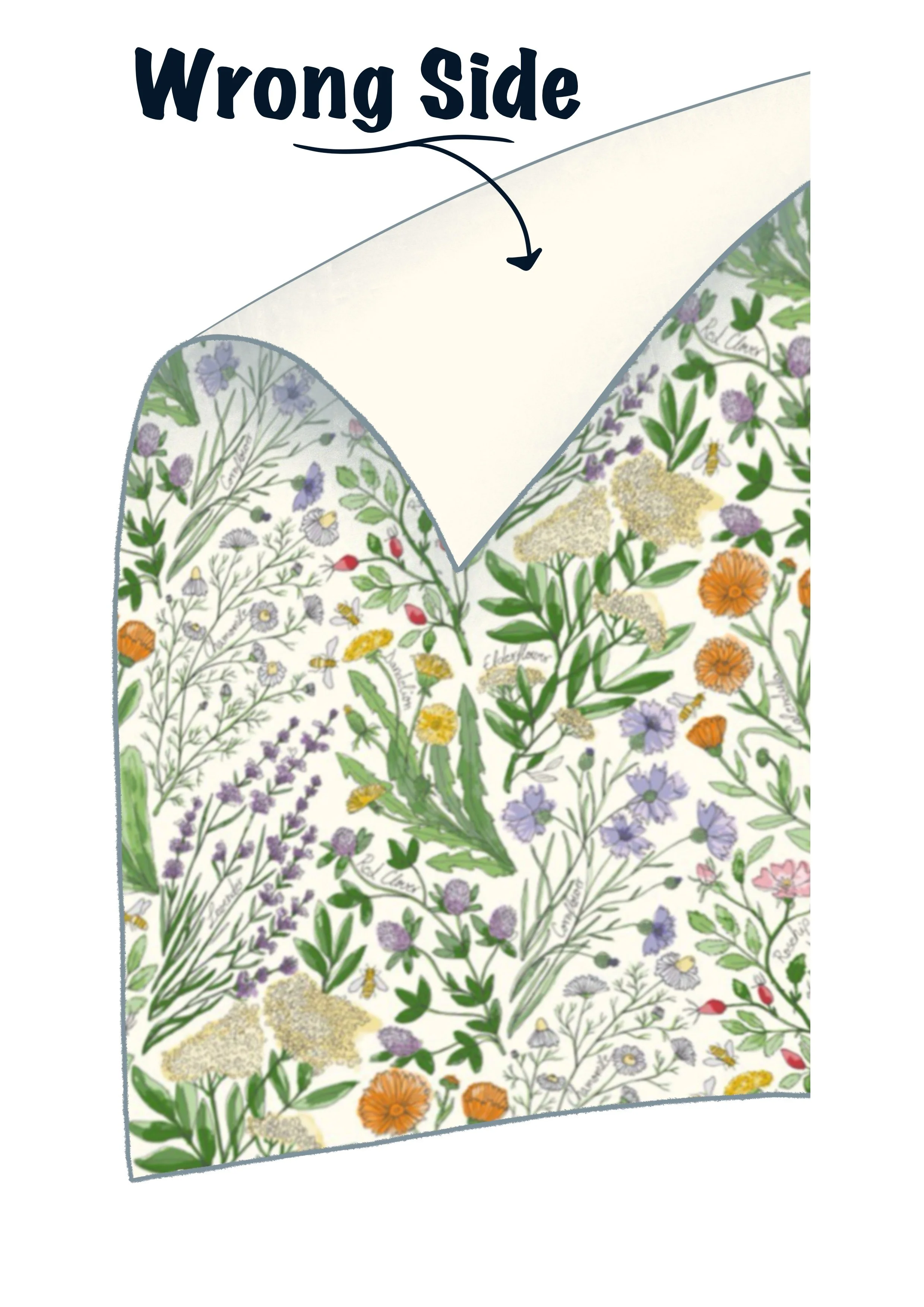
WS: Wrong Side
The back side of the fabric.

CF: Center Front // CB: Center Back
CF: The vertical center line of the front of a garment.
CB: The vertical center line of the back of a garment.

SS: Side Seam
The vertical seam that runs along the side of the body, connecting the front and back pieces of a garment from the armhole down to the hem
Sewing terms and definitions:
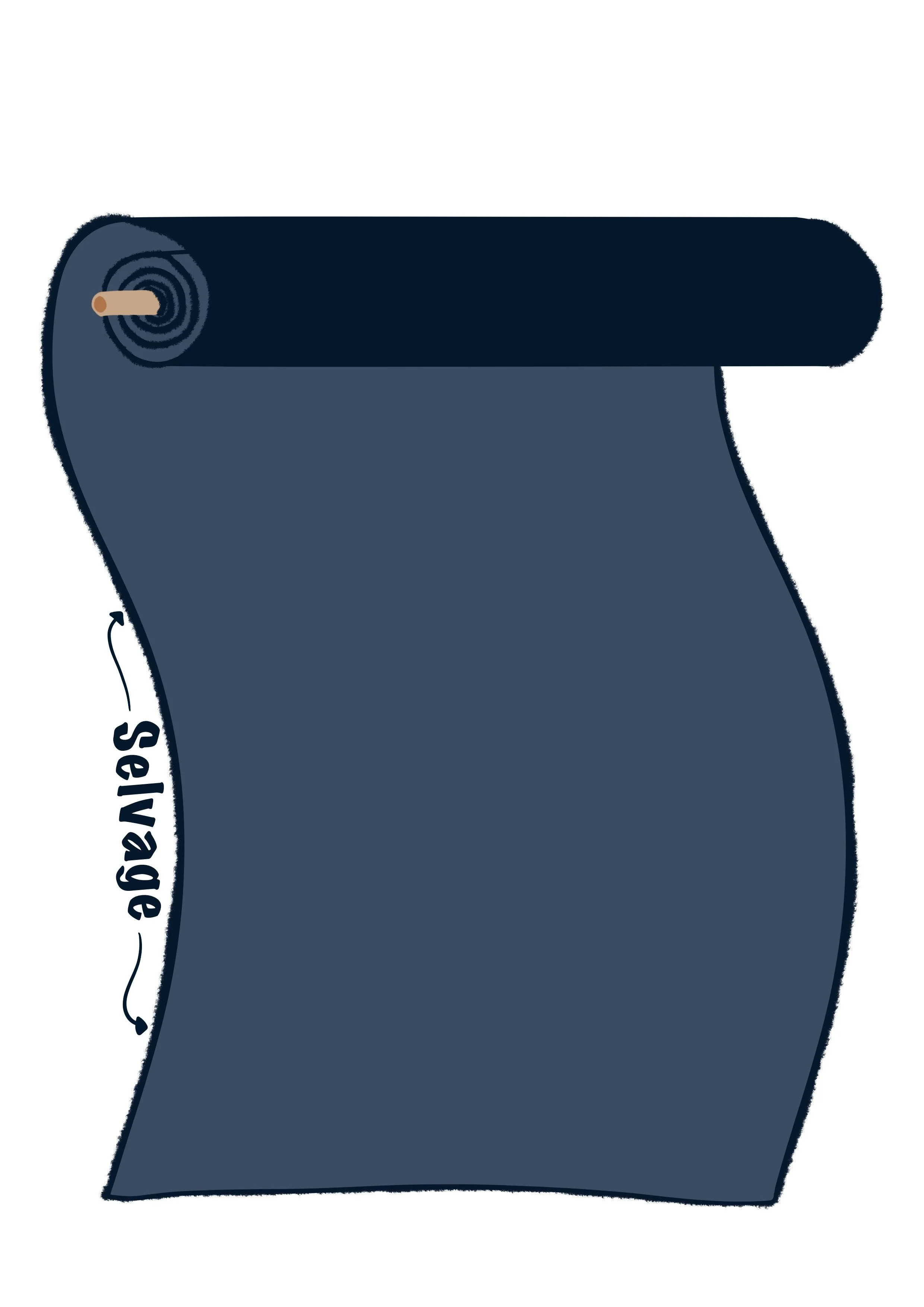
Selvage
The factory-finished, tightly woven edges that run along both lengthwise sides of a fabric roll.
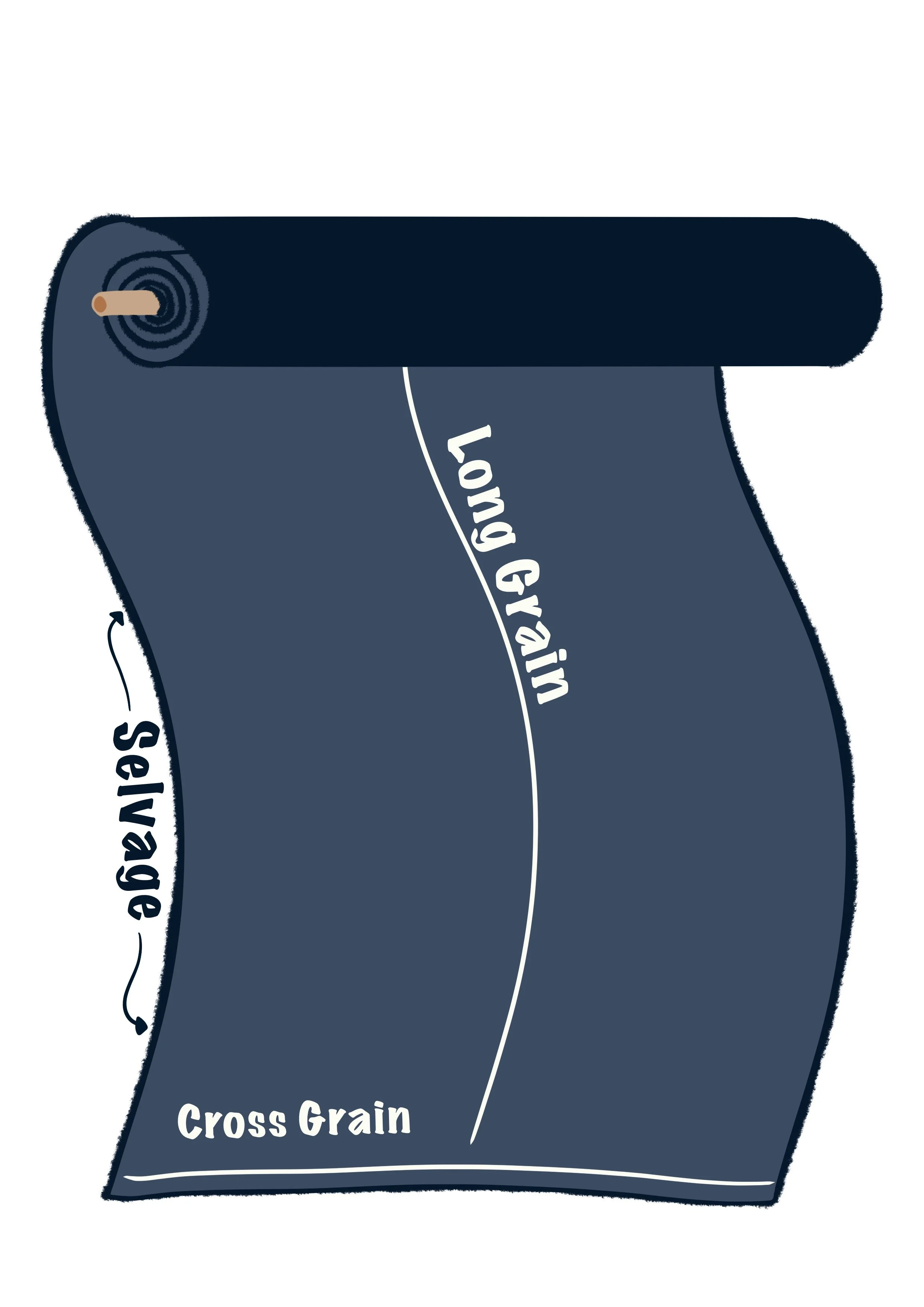
Grainline
The direction of the threads in a woven fabric. On your pattern pieces, this is marked with a long arrow that must always be perfectly parallel to the selvage. When I mark a grainline, I am generally referring to the Long Grain.
Long Grain: These are the 'warp' threads that run parallel to the selvage. This is the strongest part of the fabric and has the least amount of stretch; most garments are cut this way so they don't stretch out of shape over time.
Cross Grain: These are the 'weft' threads that run perpendicular (at a 90-degree angle) to the selvage. There is usually a tiny bit more 'give' or stretch in this direction than in the long grain.
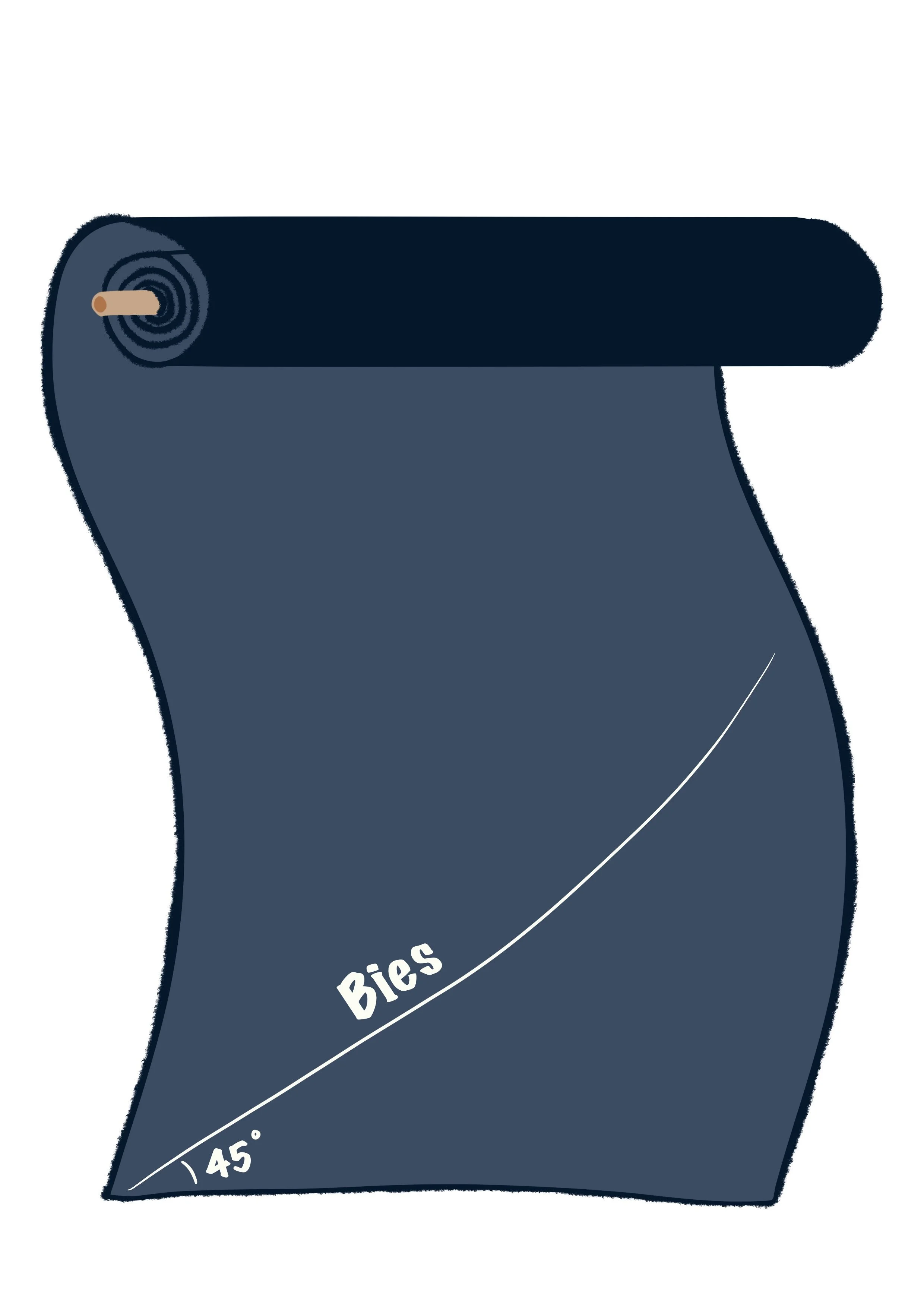
Bias
The diagonal direction running at a 45-degree angle to the lengthwise and crosswise grains. While the vertical and horizontal threads (warp and weft) are stable and provide the fabric's "backbone," the bias is where the fabric is most flexible. Fabric cut on the bias has more stretch and drape.
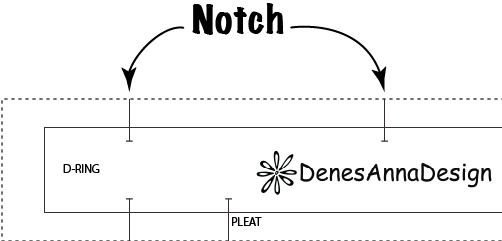
Notches
Small T-shaped markings on the edges of your pattern pieces. They are used to align two or more fabric pieces perfectly before pinning and sewing. Matching these ensures your garment is balanced and the seams are the correct length.
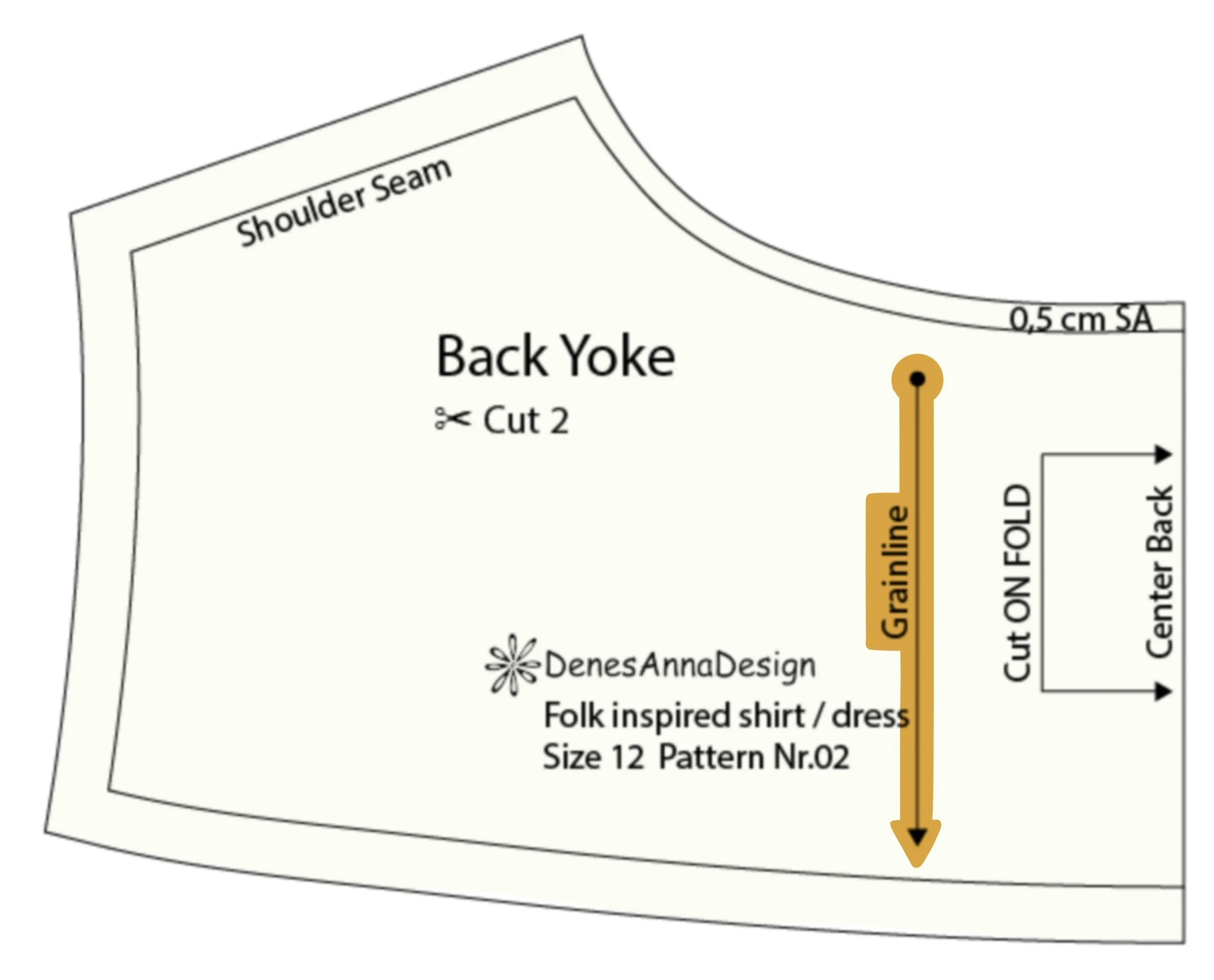
The Grainline Symbol on a Sewing Pattern
Represented on a sewing pattern by a long, straight line with a circle at the top and an arrow at the bottom. This arrow must run perfectly parallel to the fabric's selvage.
In the case of:
Directional Prints: The grainline arrow must always point down toward the hem so the design faces the right way.
Nondirectional / Two-Way Prints: Pattern pieces can be flipped upside down to fit more economically on the fabric.
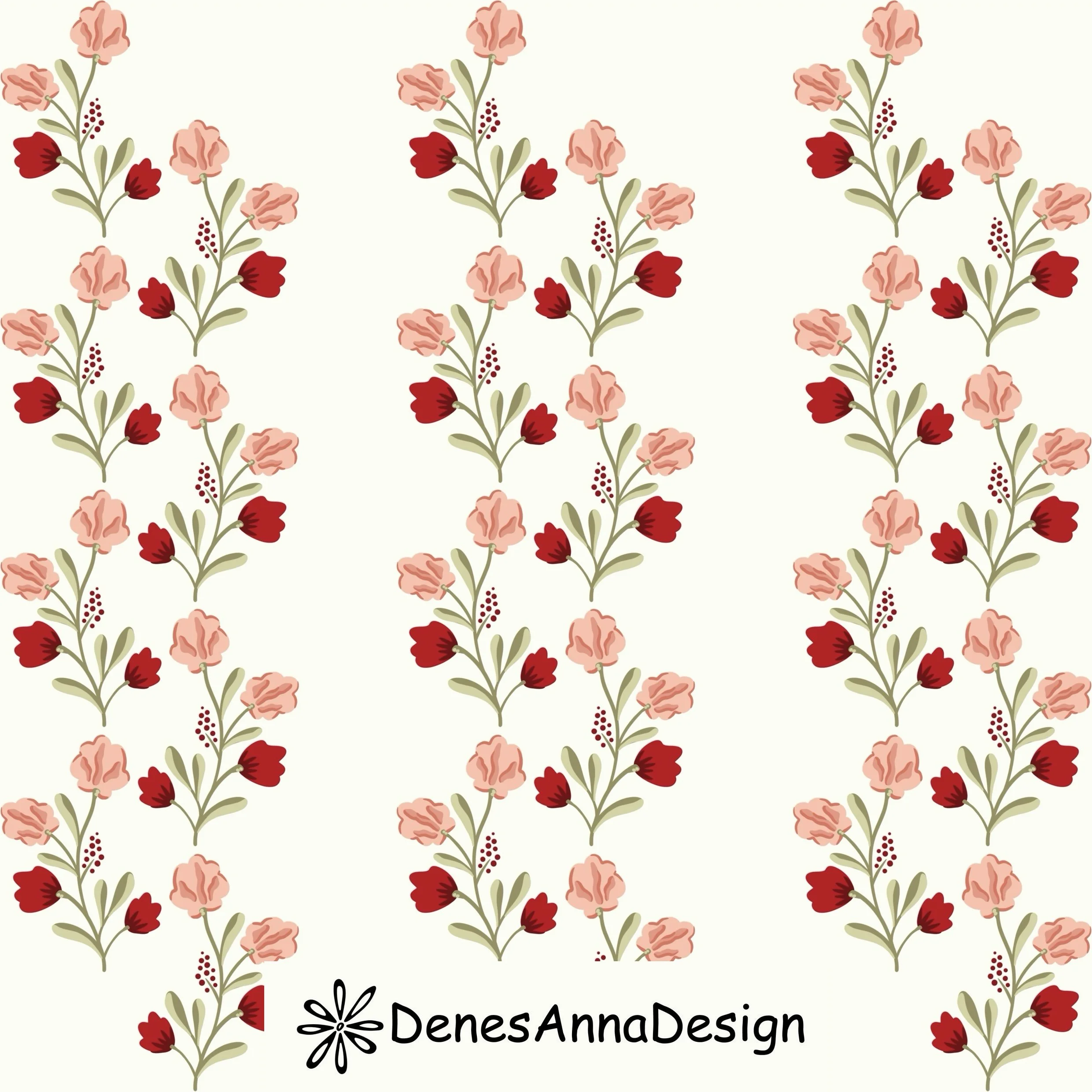
Directional Print (One-Way Print)
A fabric design that has a distinct "up" and "down" orientation.
Cutting Rule: All pattern pieces must be laid out facing the exact same direction (with the grainline circle on the sewing pattern pointing to the top of the print and the grainline arrow pointing to the bottom) so the design doesn't end up upside down on the finished garment.
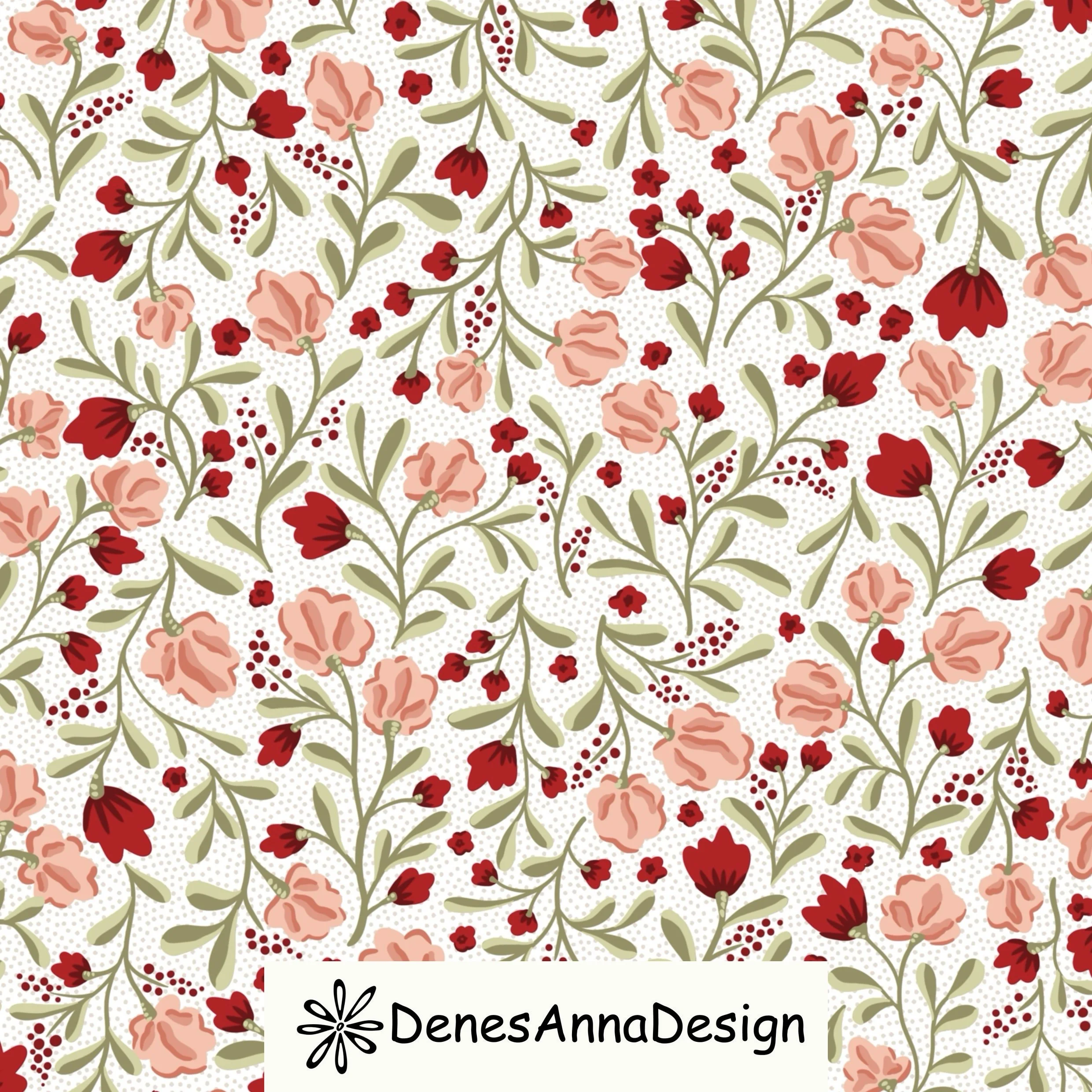
Two-Way Print
A fabric design that has a vertical orientation but works equally well in two opposite directions. The motifs point both up and down.
Cutting Rule: You can flip your pattern pieces upside down to save fabric, as long as the grainline remains perfectly parallel to the selvage. However, you cannot turn the pieces sideways.
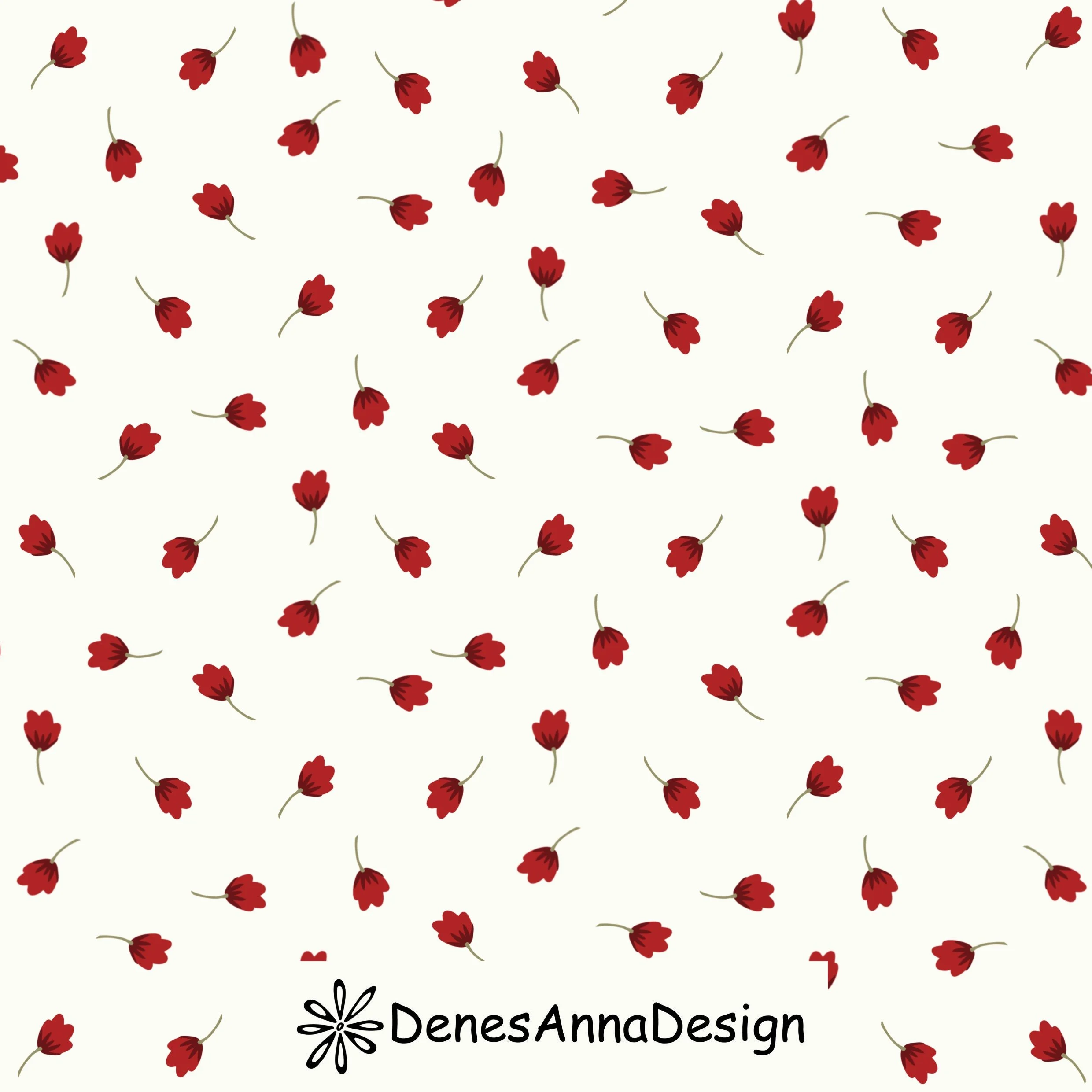
Nondirectional Print (All-Over Print)
A fabric design with a random, tossed arrangement that looks exactly the same no matter which way you turn it. It has no top, bottom, left, or right.
Cutting Rule: This is the most economical fabric to cut. If the sewing project allows, you can nestle and flip your pattern pieces in any direction—on the long grain or the cross grain—to fit as many pieces as possible onto the fabric yardage.
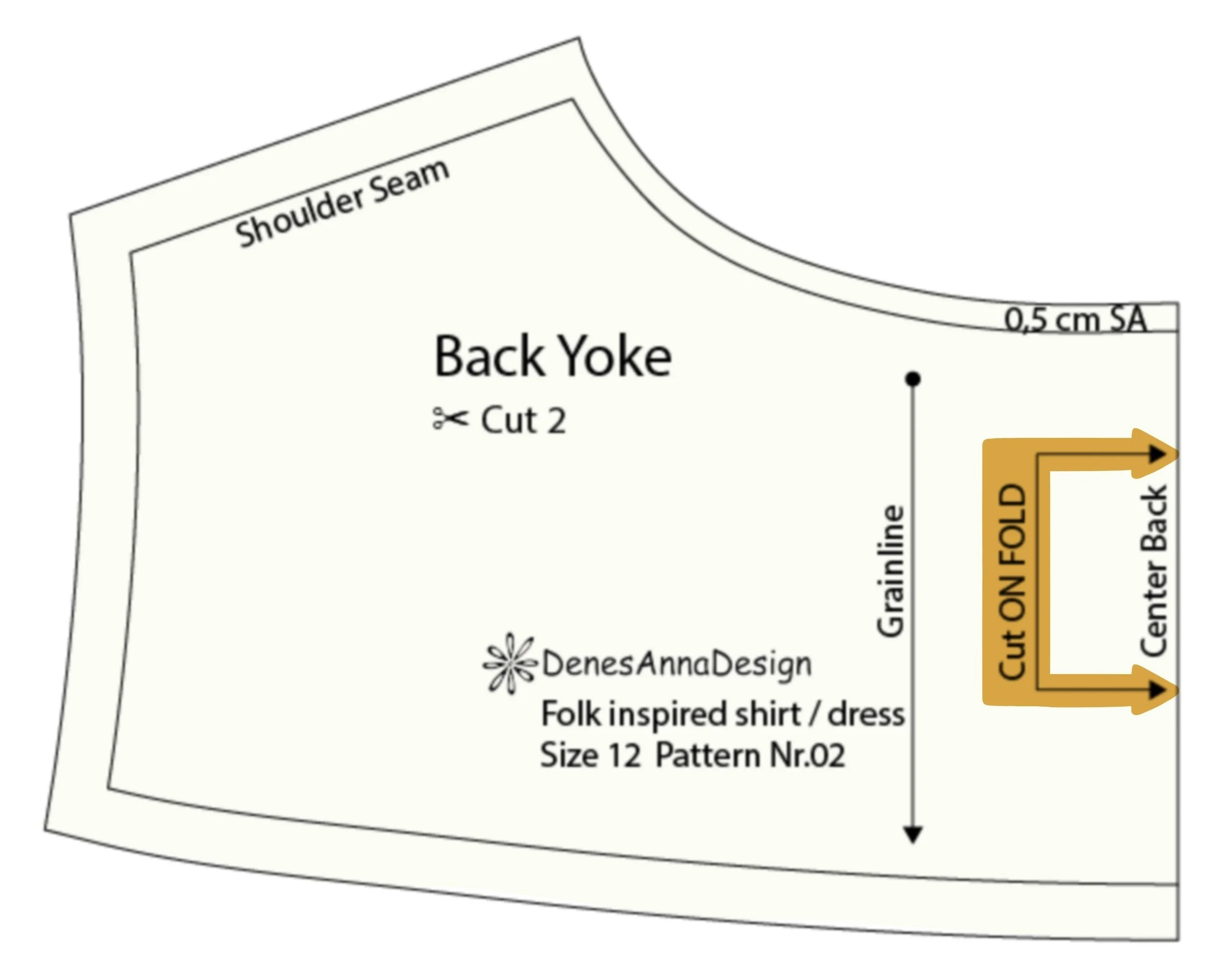
Cut on Fold
This is an instruction telling you to place the specified edge of a pattern piece exactly along the folded edge of your fabric.
The Symbol: On a pattern piece, this is represented by a long line with two perpendicular arrows pointing directly toward the edge that must line up with the fabric fold, which runs parallel to the selvage along the straight grain.